A culture of litigation even if it be non adversarial litigation by relaxing the rule of locus standi can be disruptive. The confrontationist approach and the tendency to disagree amongst those with argumentative persona is driven by a desire to prove their own view. Law in the social context is an expression of culture in way of ordering of things. Legal literature in the form of case law, legal scholarship, and institutional data on being reviewed enable formation of some testable propositions or hypothesis. Due to complexity and difficulties of quantification application scientific methods directly becomes difficult. Behavior of people while interacting with legal institutions, their belief and faith in it gives rise to s legal culture.
Several characteristics or traits fundamental to culture have been identified as symbols, integration, their shared and learned features, how activities represent societal values and symbolize power and influence. Origin of the word culture is to cultivate, tend or to till human capacity right from the earliest society of hominids which relied on environment for survival. It now encompasses range of non genetic human of human activity. Physical artifacts created as well as intangible assets like language, custom to the contemporary techno culture forms a complex. Transmission of cultural traits implying they are not static and the methods of communication make them change through external influences and recombinations.Cultural development also gives it a special domain and language. Cultural identity is dynamic existing within social context, patterns and structure. Structural context has a setting describing paths of interchange between internal components while path independence is described when two paths have the same change in potential energy hence imply conservative forces. Conservative societies encourage traditional values and established institutions in for discovering self identity and cultural identity. The method of accomodation of norms and values of society is law in action. If Culture as the mode of thinking while the process of acquisition and conservation of culture for general use becoming civilization with its own mode of production id generally considered as s workable definition.Both culture and wider notion of civilization are inter- related. As Culture is acquired from formal and informal learning shared through language, it is dynamic when it responds to socio economic, scientific and technical, political changes. Dynamic culture, thus, has fluidity and change while static culture has a stable fixed point with stationarity.
Fixing stages in development of society, arts, sciences and governance in the evolution of civilization raises certain questions. The stages in cultural interaction of initial euphoria, frustration, acceptance and adjustment gives a changing scenario.frIntelligence comes to be defined by the culture in which it exists. Intelligence quotient measures in general population are also culturally determined. The ability to interpret cultural aspects in terms of multiple realities and diversities of experiences from the same cultural context is a type of critical cultural consciousness. Even culture without written expression has identifiable patterns as found in ethno-mathematics. Critical studies of cross cultural comparison with cultural dynamics of formation, maintenance and transformation of culture over time in micro/ macro frame and their meaning over time show shared values in globalization and cognitive changes in entangled histories of non genetic information available, accessible and applicable to human civilization. Invention and importation in randomness in the cultural information brings out the importance of the mechanism of change.
The Indian culture and it’s antiquity as a civilization with geographical boundaries had to face imposition of foreign cultures through conquests. Even in it’s antiquity it had a cultural consciousness and cultural competence to accept diversity of experiences. It post independence entangled history in a neo colonial setup also came up against Orthodoxy based on relatively new antiquity of Islam and Christianity. Selectionist approach in dynamic behavior subject to variation and selection a new India emerged. The consensual character of a constitution with its colonial legacy and democratic norms soon developed a litigation culture and an enforcement culture in an adversarial frame. The Contemporary Scientific Culture and dissociation from religious concerns emerged in the West around 1210 and proceeded onwards. Despite it’s flaws of motivated reasoning, reverence attitude, cultural hegemony, opportunism, anarchic conceptualization in the garb of rationality, biases a power relationship between society, capital and science has emerged. Western colonialism is estimated to have begun around 1500’s with discovery of sea route around Africa’s Southern Coast around 1488 CE. Colonizers developing political institutions to consolidate acquisition, introducing western style reasoning of mathematics, physical model education , administration of these institutions would leave a legacy. In Colonial India the British developed the judicial system in India in phases. In earlier phase the administration of law and justice was in the hands of non legal and non professional Englishmen till 1773 and the passing of regulating Act and model adopted of the Court at Westminster. A correction followed in 1778. The Dual system of Courts was unified on 1861 with distinctive British features. The advent of Privy Council and first Law Commission in 1833, the process codification of laws started. Carrying the legacy over to post colonial period the trapping English Law remained. Institution building is a continuous process. Developing and strengthening the organizations structures, there has to be a culture of improvement in it’s processes. Alternatives emerged as panchayat etc. along ancient Indian Judicial hierarchy and perceiving the judicial system without colonial and other institutional interests began.
There was a litigation explosion.(Litigation And Society, Lawrence M Friedman, Annu. Rev. Sociol.1989)All in the name of making the constitution a living document, rights were being extended beyond the state or inside it. Expansivity of rights were part of a vibrant litigation culture. Concomitant constitutional duties and commitment to democracy were overshadowed in the rarefied elitism of pressures groups.in the judicial setup. Elite capture of foreign policy, economic policy and various institutions by the new elite which had emerged in the colonial setup took place. It also gave the picture of India( Bharat) as a failed state or on the verge of being a failure by those responsible for building a narrative. The failed state lacking ability to discharge fundamental developmental functions and fundamental duties or to protect envisioned expanded fundamental rights but somehow having control over it’s territories and borders was the underlying moving force in the litigation explosion and a judiciary with no accountability to the people. Increased visibility in media and growing influence of media started dictating public interest litigation.. Inability of infrastructure maintenance. law maintenance, security assurance, civil office staffing, involuntary population movements in a general atmosphere of corruption were noticed and criminality reflected in its politics. Intervention to stem failure of nation building and delivering positive public goods and services were still an obligation. Emergence of ultra individualism as self fulfilment, self reliance, personal autonomy changed relationship dynamics and family bonds. The market to be treated as a spontaneous order and as an emergent order in complexity coordinating peoples actions( Individualism and Economic Order 1948, Law Legislation and Liberty 1973, Friedrich Hayek), the social order that evolved naturally and those that were designed by humans the spontaneous order or self organization is what people follow without being aware of them surfers from incoherence and a disconnect. Selfish self interest pursuit, and pleasure seeking cornerstone of utility theory misses out the fundamental building block of Neuroeconomics viz, homeostasis and misses out the fundamentals of Econophysics in terms non extensive thermodynamics of micro and macro states of a neo classical frame. Cartesian self awareness and innate certainty in a rectangular coordinate system does not describe circular symmetry, complex shapes and changing directions, a complex system, orbits, curved paths rather imposes a limitation. Neuroeconomics is not just a tool for behavioral economics and decision making under uncertainty with risk aversion as it is made out to be in contemporary works but about extended neural networks which integrates extension theory with extension distances for pattern recognition using fractional calculus, learning, multilayered neural networks in deep learning with threshold values, synaptic weights, amplitude of connection between two nodes, clustering and homeostasis/ functional stability for multi layered perception. When Econophysics and Social Chemistry of reticular geometry is considered along with insights from Neuroeconomics a definitive picture with the precision sought in natural sciences is sought to be introduced to social sciences.
Institutions like the judiciary, already burdened as a legacy institution of colonial era due to the elite capture had to deal with these conflicts also. Collective and class actions litigation were a part of the compensation culture of the United States of America and its ideas spread rapidly . Allowing third party financing of litigation had created interest groups.Similrly allowing contingent fees to lawyers had lead to more risk taking in litigation and championing dubious legal theories there. Crowdfunding of litigation suffered from conflict of interests but organized and corporate financiers of litigation had appeared and the market had expanded vastly. The question of big business taking control of state and judiciary was not merely about the donations and campaign trail as in USA. Legally justice could not be bought but there were far too many instances of that not being so. Other forms of misuse also apoeared.NGO’s in India started running human rights scam in business model of human rights getting huge funds particularly from USA and total donations recieved being lakes of crore rupees. Trying to leverage emotional manipulation without providing utilization certificate for the funds. They went even to the extent of filing petitions of grant of citizenship to illegal immigrants like Rohingiya’s and Bangladesh ( SLP(C)34474/ 2025).
The emergence of a managerial class in contemporary economics with emphasis on primary or shared goal with employees and executives through a management team in a system formed a specialized area of study. Managerial decision making, organizing, planning, controlling the resources which were informational, financial, physical and human involving a policy lead to articulate formulations. The companies policy on communicating and maintaining rules and guidelines laid down accountability and transparency in a multi disciplinary setup. A role play was involved. Cognitive behavioral interventions to treat maladaptive and dysfunctional behaviour through a sequenced model behaviour as well as writing out scripts in rehearsals. There was a change in behaviour to carry out a social role, set of expectations about the self and others decide role taking or offered. Often in improvised theatrical setup or theatre game. Improvising within a set of rules there was a collaborative creation of story and choices shaping the direction and outcome in various genre in the theatrical setup.
The pettifogger as an unscrupulous lawyer was now a problem in the bar.Dishonesty in the conduct of litigation may not have been adequately covered by criminal law.The scope of abuse of the judicial process went unchecked. The Law Commission of India in 192nd report of June 2005 recommended that a prevention of vexatious litigation act be passed. Existence of an arguable legal claim could be defence against imposition of costs.
The U.S Supreme Court drew a distinction between failure to state a claim and frivolousness. A frivolous pleading lacks an arguable basis in law or fact.Neitzke vs. Williams,40 U.S, 319(1989). Bringing frivolouses to an otherwise serious environment is disruptive. Bizarre Public Interest Litigation is turning the judicial process into a farce. More criticism has come in other issues regarding public policy on science or whether the Court is equipped to keep up with scientific literature and works of technology. Discounting scientific expertise as in Lopez Bright Enterprises versus Raimonds involving environmental regulations( Science Vol 385 Issue 6704, Science.org) is contentious.
Many studies show USA is the most litigious country.Freedom to sue has become very costly. Traditional theories of champarty and barratary prohibited third party financing. Development of litigation financing as an investment strategy requires risk taking and a diverse portfolio of funded litigation based on sound legal theory. Though mostly funding to litigant or law firm is common but direct involvement in litigation for a share in the profit/outcome is more in use in property disputes, compensation cases or those effecting political economic policies. American jurisprudence has developed in a sort of a non zero sum game theory with multiple stake holders as players. Motivated litigation can have shocking outcomes as in the case of United States Of America Versus Nikhil Gupta in which a District Court, United States District Court Southern District Court Of New York about purportedly for planning to kill terrorist Gurpatwant Singh Pannu(who claims to hold dual citizenship of USA and Canada) by Nikhil Gupta on instructions from one CC -1 has been filed. Interestingly this same Pannu was supporting statements made in USA visit earlier the same month of a controversial Indian politician by the name of Rahul Gandhi (Ghandyi) who had become leader of the opposition in Parliament in India.The defendant Nikhil Gupta was arrested in Czeck Republic and had been taken to USA. This so called Court issued a summon on 18/09/2024 to PM Narendra Modi as executive head, Ajit Doval etc. to appear in Court with an upcoming September 21-23 visit to USA in one of the biggest humiliation. Only American citizen ( who may have acquired American citizenship) and who may even be a wanted terrorist has value and not Indian citizens. What USA thoughts about India or it’s citizens is inconsequential just as it’s opinion on, freedom of activity, life and liberty for it’s own ‘Oh, so valued citizens’ or let’s Make USA Great Again of Mr. Trump and cohorts on 2025.
The power of Judicial Review or the ability of the court to declare a legislative or act in violation of the Constitution, is not found within the text of the Constitution. This doctrine comes from Marbury versus Madison (1803). But Mr. Trump had openly declared the presences of what he called radical leftist judges a threat to MAGA and Trade War declared in 2025. Borrowing the idea of public interest litigation from American Jurisprudence, even using language like, ” Public interest litigation was a weapon which has to be used with great care… “Indian Bank’s Association versus Devkala Consultancy Service (2004) 11 SCC 1, Ashok Lenka versus Rishi Dixit(2005) SCC 598 hints at PIL being viewed as designed for overawing, deterring or inflicting damage. The legitimacy is undermined and things are done that are not recognized as law, verdicts are based on personal preferences or appear as extension of political process.PIL on risk regulation of emerging technologies has seen Supreme Court of India became a part of national narrative on technology development ( tesearchgate. net) in a 2009 order in case of K Balakrishnan and Ors. Versus of India it ordered the setting up of a technological mission to find solutions for water scarcity nationwide. The national narrative on technology development and scientific thinking, particularly the regulatory aspect had seen a shift. The national narrative on technological development has to be philosophically understood in the backdrop of various areas of active research and raging debate about interpretation in quantum theory.
Building a national narrative on technological development and the Global Summit on Artificial Intelligence requires a relook at the new areas of research particularly quantum computing. In the absence of a universal quantifier the discussion around quantum death and quantum immortality had emerged. The probabilistic notions and idealized circumstances that maybe impossible to achieve, quantum suicide could falsify any interpretation of quantum mechanics other than many worlds theory. In a variation of what was called Schrodinger cat in a box which is both dead and alive until the box is opened and found out, question was posed about how many lives does the cat have and the cats view is also known. The expectations of least probable surreal and descending through a decreasing continuum of consciousness demarcation of levels of consciousness or beyond the continuum are still major concerns. What happens next is replaced with what is experienced next. Trajectories from the past or trajectories on the future are conditionally confined to some parameters in energy and mass relations as e =mcⁿ then constant quantities are decided as distinct from variables. The Damped Harmonic Oscillator problem in evolution where oscillations gradually loose energy and amplitude over time due to dissipative forces in a physical system. Evolution is then describes how the oscillators state (position and velocity) changes over time to settle on a stable equilibrium. An elastic/ inelastic spring force, a resistive damping force and inertia, harmonic oscillator is a system that oscillates around an equilibrium with a restoring force proportional to the displacement. In an evolution operator is like a viscous force which causes initial oscillations to decay towards a stable state with a damping term -C*v and finds itself in the exponential of the stochastic eaustion. At the quantum level it poses a huge problem to maintain the uncertainty principle essential to it unless probabilities are conserved.
In Econophysics the evolution operator has issues with growth with stability. The Dynamic Stochastic General Equilibrium does not have the standard evolution operator in the quantum mechanics sense nor is there a single operator rather shock waves and agents make it a neo classical system.The consumers in market for adjudication also show varied preferences.In the garb of social activism the pressure groups forward the rationale of exercising their democratic rights. The politico-legal foundations of social activism lies in its attempts to have a transparent and corruption free democratic setup and expanding the rights. The success in dynamics lies in the methodology. Reducing politics to its atomized political entity there is competition for political influence and favours. The protest culture with collective identity actions and ideologies has endogenous factors in reality construction and it’s meaning making process. Its external effects of protest performed are integral part of popular culture( The Art of Protest: T V Reed, 2019,University of Minnesota Press, jstor Review). Widespread protests by Doctors, lawyers and public outrage across the country against the Kolkata rape and brutal murder of a lady doctor in the seminar hall of the RG Kar Medical College and Hospital on 9 August 2024 and vandalization by a mob of the Hospital on 14 August 2024 to destroy evidence after the case was handed over to CBI for investigation, nationwide strike by Doctors called by Indian Medical Association on 16 August 2024. High Court had called it an absolute failure of state machinery seemed to wake up the Supreme Court of India to take up suo motto cognizance in August 2024 and hear the matter on 20 August 2024. The national furore and extensive coverage by the media and politicization of the failure of Mamta Bannerjee led Trinamool Congress Government in West Bengal in the way the incident was handled became a marker of the sensitivity of Supreme Court to such issues.
Furthering political or corporate interests in a misuse of the Public Interest Litigation doctrine of developing a new jurisprudence had pitfalls. The underlying assumption was that the state apparatus favours the politically powerful and cannot correct market failures. Accountability of the state to constitutional violation that effects weaker sections of the society through an attempt to empower the public to represent their problem which breaches fundamental rights highlights failure of the state to address the grievance or aggravating it. Philanthropy does not fulfil the activities of Civil Society and its web of organizations. Apparently who gets to define public interest makes a difference, it is in their discretion and how the discretionary powers are to be exercised. The benevolent behaviour is puzzling even in weak explanations as enlightened self interest through entities called Foundation which are treated as private funds seeking Public Goods. Both Hindenburg Research ( founded by Nathan Anderson) and George Soros ( who received the highest civilian award of USA in 2024) are short sellers in the stock markets and manipulators. Exerting power and control over others using threat to reveal information to achieve goals, financial gains, those blackmailed often have a low self esteem and a fear of conflict. People like Soros hit headlines in India with their activities which were found disruptive. The argument cannot be that they are doing altruism by bringing down speculative profits of others and stabilizing stock markets for some wealth redistribution by their activity even though they defend short sells play a crucial role in exposing fraud and protecting investors. Self refrence and social reflexivity and recognizing social forces and formulation of general theory of reflexivity by George Soros and his Open Society Foundation misses out transitivity and symmetry conditions in public goods/ private goods divide and strength/ stability in stock markets. Moreover his extensive funding of political causes with business of poverty is mostly disruptive. Yet again, Massachusets Institute of Technology of USA says act of giving in models of rational behaviour while maximizing utility with laboratory experiments in a linear public goods game, role of social information and motives become relevant( mitpress. mit. edu) Reputational benefits and tax benefits were also not full explanation. SEBI banned naked short selling for institutional investor ( http://www.businesstoday.in ,5 January 2024).The attempts to destabilize market through Hindenburg report lead to selling by Foreign Institutional Investors but domestic investors.When judicial over-reach and judicial adventurism begins there is a weakening of legislative functions.
What implied public interest. A letter written by Clarence Earl Gideon to US Supreme Court was a landmark. It was decided in in 1963 laying down the foundations of PIL and Legal Aid .(Gideon Vs. Wainwright 372 NS 335(1963)). Soon it caught on in India. The judgment of the Supreme Court of India in Mumbai Kamgar Sabha Vs. Abdulbhai(AIR 1976 SC 1455) which is considered as the foundation of Public Interest Litigation in India.
The influence peddling leading to blackmailing with questioning judicial and other appointments, raising questions of transparency or simply gaining favourable orders under hidden threats of alleged exposures to create a controversy was result of the works of a coterie of lawyers who considered themselves part of certain elite club with access to information which ordinary people did not have. The collaboration between politicians and judges in India hung around the system of blackmail and manipulation in many instances. The reality was that corporate houses were at the forefront of debates on critical issues and the new elite found a great opportunity in being their mouthpiece. From corporate sponsorships, lobbying and influence mongering the activist creates pressure it effects commercial decisions and judicial functioning and it’s outcomes.The power to dismiss a case summarily as an abuse of the process of court was used in Castro Vs. Murray(1875)LR10Ex213 then in Dawkins vs.Antrobus(1881)17Ch D 615. Such summary dismissals were so wide spread in the Supreme Court of India that everything appeared arbitrary.
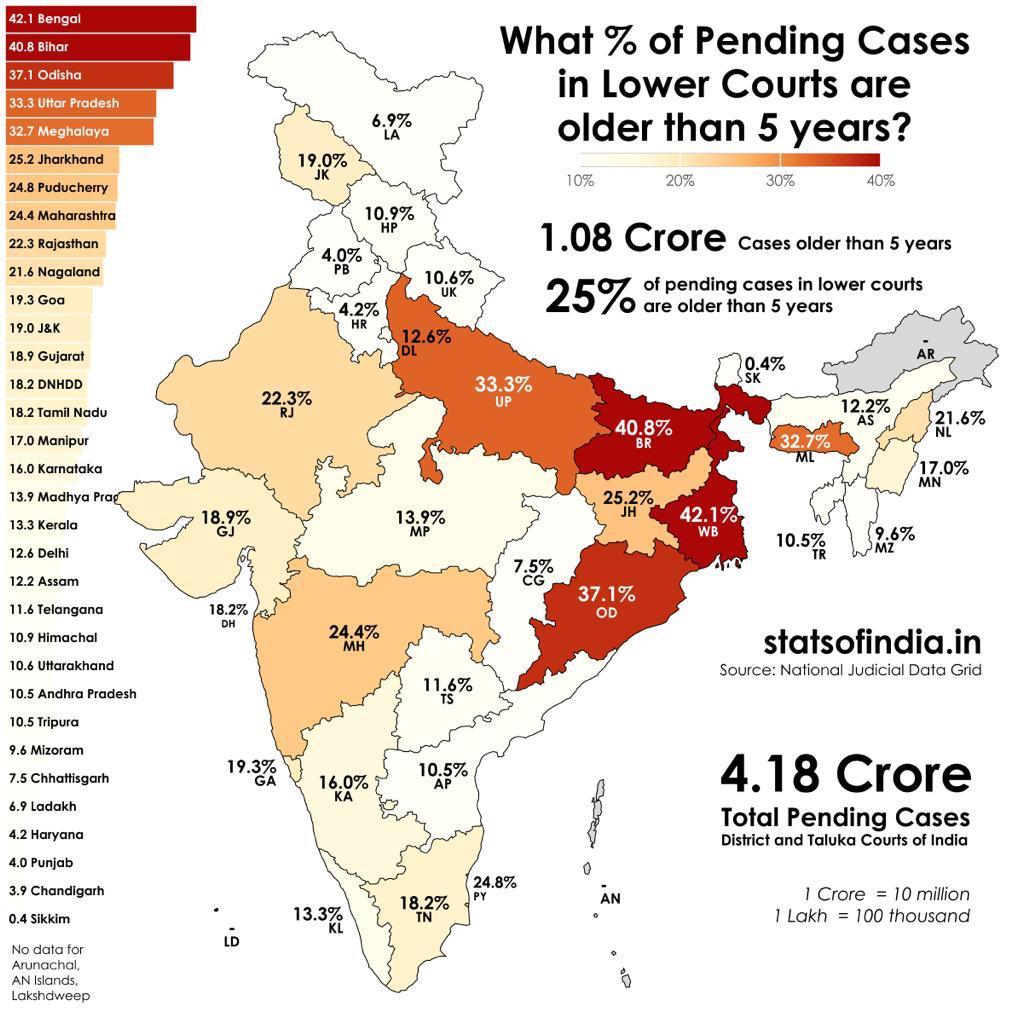
The perspective on any culture is either functionalist,conflict or symbolic interactionism. Use of cultural elitism as a global strategy effecting preference rankings would make preferences redundant. Anti elitism becomes cultural politics and other conjectures arise. There is strengthening of the expectation of workability of markets and notion of hegemony. There can be uneducated literates as well as educated illeterates depending on the level of literacy. Rejecting distinction between elite and popular culture as being high or low. Cultural hegemony is glaring and cultural artefacts are read not only in the aesthetics but also in social and material perspectives.Adopting Western attire reflecting an aspiration to align with these values, influence of existence of social hierarchies, social categories,cognitive states, status and the desire for social mobility. ‘ Fit for the Royal Ball’ with Cinderella effect of rags to beautiful ball gown. This includes looking for legal publishing and profits, law reviewers, the politics of awards and it’s corporate sponsors who share their values, the hype of publicity machinery and what it tries to conceal. Delays in Courts in India invite abuse of the system, impede efficiency as well as damage their legitimacy. Strained capacity due to excess demand in the market for adjudication creates overload and even inaccessibility.But the overflowing dockets are not because of all types of litigation having increased, rather increasing literacy and population explosion play a role. Data to deny population explosion from around 1951 onwards in terms of population growth rate having fallen from above 21 % between 1991 – 2001 to around above 17% in 2002- 2011 to the slowest annual rate of population growth of 0.99% of 2020 0.97% of 2021 and 0.95% of 2022 when moving from decade rates to annual rates. Evidently demographic transition is taking place. Population economics has found application of bifurcation theory of chaos and working with attractors a useful method in controlling volatility and explosive situation. The demographic transition due to illegal migrants and birth ratio amongst muslim as compared to that of Hindus, Sikhs, Christian, Buddhist population has been debated recently. For a developing country high population density and high percentage of employable people, increase in population is detrimental to its economy. In this scenario the evolution of gender role and relations as well as fertility choices are relevant. Litigiousness of the population could have increased with rising literacy but spiralling costs of litigation and delays in justice system are alarming. The Department of Justice data shows above 4 Crore cases are pending in the Indian Judicial system.
Time management would be necessary for equal weightage to various types of cases in the Indian judicial system. The judges to population ratio was a dismal 21.03 per million as on 31/12/2021 while as far back as 1987 the Law Commission had recommended it be increased to 50. The system of Time-based weighted case load method of USA which involves the total number of judicial hours required for disposing of the case load of courts seems to be favoured view instead of fixing an time outer limit which can be given to any particular case.Some cases get unusually long hearings while others get thrown out in minutes in a whimsical way. But for judges open discussion about such issues was a sensitive issue. Though it was claimed Constitutional Integrity to the basic structure, loss of integrity was kept in ambiguity. Chief Justice of India Mr. Surya Kant took objection to NCERT Class 8 School Book’s Chapter on Corruption in Judiciary.
Under Art 13, 32 Right to Constitutional Remedies, 226, 132-137 , Provisions of CPC and CrPC,the notion of right to sue or petition can be made out. The distinction lies in whether it is of a constitutional magnitude or not. The Public Interst Litigation culture has taken roots due to relaxation of the notion of locus standi and the proceedings being in a non-adversarial frame. With behind the scenes manoeuvres by corporate , political and stakeholders in the judiciary it is perverted. A case concerning misleading advertisement of 10 July 2022 by Patanjali to which IMA went in a public interest litigation claiming it is playing with Public Health on 17 August 2022. The Patanjali was warned, in December 23 and January 2024 it again made such advertisement, on 10 April 2024 the Division Bench of Justice Hima Kohli and Justice A Amanullah of the Supreme Court of India uses warnings like “We will rip you apart”(;retail.economictimes.com).Mr.Justice Ahsanuddin Amanullah already had a Contempt Case filed against him by Alka Verma for using offensive language when at Patna High Court(Soolegal.com 21 September 2028). Radhakrishna Singh had written to Chief Justice of Patna High Court Amreshwar Prasad Shahi to transfer the Criminal cases against Chief Minister Nitish Kumar from Mr. Justice A Amanullah fearing injustice, Mr Justice Amanullah lived with his elder brother Afzal Amanullah a senior bureaucrat in Nitish Kumar Government and whose wife was former Social Welfare Minister in Nitish Kumar Government and an MLA from JDU( Times Of India, 1 February 2019). He was elevated to Supreme Court of India in 6 February 2023 when he was a Puisne Judge Patna High Court. Having been transferred from Patna High Court to Andhra Pradesh High Court and re transferred back to Patna High Court is a chequered career.The trust deficit with the executive keeps growing.
The implications of contemporary social activism on law, business and society are controversial. Recent issues of Ram Janmabhoomi Case, Gyanvapi Case, Sambhal case courts have been called upon to decide disputes about religious rights and freedom, control of religious Boards etc. The business environment have some human rights protection issues which are relevant. Human rights obligations guide budget decisions and the role of human rights, human capital development in sustainable development arguments have been put forward that group based and horizontal inequality as a driver of violent conflict.The notion that the legal activists have superior information and control over legal language and with adequate financing better accessibility to the judicial system is misleading. More than 600 lawyers including Mr Manan Kumar Mishra, Chairman Bar Council Of India for past 12 years and regular attendee of IBA meetings ( Nominated for Rajya Sabha) and Mr, Harish Salve, International Lawyer, wrote to Chief Justice of India Mr. Dhanajay Y Chandrachud about vested groups trying time pressurize judiciary and defame courts + The Hindu 31 March 2024).A group of 21 retired judges of Supreme Court and High Courts wrote to Chief Justice of India on the escalating attempts by certain factions to undermine the judiciary ( Deccan Chronicle 15 April 2024). Letters of these kinds receive media attention as support to the CJI, Mr. Justice D Y Chandrachud from various quarters and suggests some clandestine insidious attempt. The letter wars and Mr. Justice S N Dhingra comment on an interview with PTI, that actions of Mr. Kapil Sibbal, lawyer and former law minister statement ” The history of this court will not be written in golden words” in Court prompting 21 retired judges to write to Mr. Justice Chandrachud ( verdictum.in 15 April 2024) is seen as the work of a lobby. The other lobbying letter writers gathering in support of Mr. Justice Chandrachud appear to be putting a stamp of approval to way things are and indirectly seeking the new elite band of senior designated lawyers to be the torchbearers in the name of independence of judiciary and it’s new legacy. In a recent development 21 Global International Organizations wrote to Chief Justice D Y Chandrachud requesting speedy disposal of the case relating to Adani Group after a report by London based Financial Times citing documents of Organised Crime and Corruption Reporting Projecting( Deccan Chronicle, 25 May 2024). The Judiciary appears to be hacked by a nexus built by such International Groups.
Litigation funding and specialized financing is visible in international arbitration and in PIL cases. Publicity seeking is more common. The overall dismal scenario of low number of judges to population ratio worsens because of internal politics of furthering personal interests of promotional avenues via seniority leads to huge vacancies in sanctioned posts. Yet risk taking in sponsored litigation is on the rise and taking up valuable time. There is a very thin line between judicial activism and judicial over-reach.Striking down of the National Judicial Appointments Commission Act, Cancellation of licenses under 2G Spectrum,Recertification of film Jolly LL.B 2 are some glaring examples of judicial over- reach. The issue of forum shopping and bench hunting also arose in the case of licenses in 2G Spectrum as another bench took up the matter even as the main case was pending before another bench. In the disappointing judgment in Writ Petition(Civil) No. 13 of 2015 by declaring National Judicial Appointments Commissions Act i.e. Constitutional Amendment Act 2014 as unconstitutional the opaqueness of the process of appointment of judges was retained. Even more bizarre order on 20/04/2019 under Art 32 in Suo Moto Writ Petition(Civil) No. 1 of 2019 concerning allegations of sexual harassment agains CJI Ranjan Gogoi. He himself was a part of the Bench hearing the matter but did not sign it. Was this a matter of public interest?
Another notable proceeding was earlier in 2010 in WP(C)202 of 1995 giving rise to Criminal Contempt Petition 10 of 2009, in which an Ex- Law Minister filed an impleadment Petition with an affidavit that eight of the last sixteen Chief Justices were definitely corrupt.In yet another report of 01/012021 the Andhra Pradesh Chief Minister filed an affidavit before the Chief Justice of India with serious allegations against the Chief Justice of AP High Court and Supreme Court Judge Mr.Justice N V Ramana.In any case social activism as an advocacy is supposed to increase participation and engagement in the society for reform. The social and legal activist must take a stand as the market for adjudication tries to find its equilibrium in country which claims that income inequalities have declined in recent years as per Gini Coefficient having values between 0 .of complete inequality and 1 of complete inequality. A research paper published by PIB Chennai on 8 January 2024 of SBI research that Income Tax Base has increased and there is decline in income inequality at the bottom of the pyramid in robust economic scenario of strong market for goods and services. Even if psychology would be considered pretentious as science of behaviour, psychometric studies modelled around intelligence being a composite of abilities which can be compared quantitatively with asymptotic properties of conditional maximum likelihood and random effects using marginal maximum likelihood, fixed effect estimators and structural equations of finite mixing giving geometric regression discontinuity with a pretest static group comparison for cross section give insight just as econometrics. Every conscious act has some prior organization of neural discharge involved to harmonize conflicts. Conscious behaviour is not merely a temporary reflex in stimulus and response.Direction of the act in response is determined from within( Essays in Pragmatic Attitude, Ed. John Dewey, 1917). The Supreme Court of India has some incidents where judges want certain types of public interest litigation be filed or just start suo moto proceedings on modus operandi of purposive control.Giving directions to behaviour with reference to results still in future. Further activity by removing inhibitions States further possible behaviour.The failed state or state on the verge of failure narrative will collapse in such a scenario.
“Yada Yada Hi Dharmasya Glani Bhavati Bharat. Abhyuttam adharasya tadatmanam srjjamyadham. Paritramya sadhunan vinasaya ca dvskhartam. Dharma samstyhaparnartya sambhavani yuga yuge”Bhagvat Gita, Chapter IV-7
Laying the past at rest in no way takes away the role of pioneering works of Aryabhatta Or Brahmagupta, nor takes away the philosophical contribution of Ved Vyas.
Trap theory has developed around notion of diffusion around microstructural defects like voids, grain boundaries, dislocations in physics and social sciences. It can occur in international relations and rising powers challenging established hegemons in an order of multiple smaller states being involved in hegemonic transitions. Bilateral fears leading to pre emptive strikes are its examples. Applying this global level hegemonies would require strong bipolarity. Borrowing from natural sciences, parametric resonances ,and double frequency of electromagnetic ion trap in electric quadrupole field oscillating at two frequencies or magnetic field traps for confinement or a combination of electrostatic potential and uniform magnetic fields or trapped ions in radio frequency traps or quantum trap have yielded new insights. Population, income traps, debt traps, cyclical trap from liquidity trap, poverty( capital) trap, psychological stress from wealth ( accumulation ) trap, aspiration trap leading to low expectations and lowered capacity due to consistent unmet expectations created by social barriers, access to opportunities and discrimination in a stochastic economic system occur in economics. In stochastic economic system convergence to a state without capital ( poverty) trap or a random fixed point business cycle, threshold/ critical capital remains unidentified from past observations for future shock realization. In entangled economies it can be a strategy. The post independence India has called a crippled state by some aauthors.Ruling class hegemony where it’s world view is accepted with consent rather than coercion, culture hegemony is the neo colonial stage needs a relook regarding acceptance and shaping cultural norms, perceptions and beliefs. It has reinvented itself in many ways overcoming it’s disability. The Telecom Revolution of the 20 th Century and remarkable transformation in connecting people globally has connectivity to a new height and caused a digital divide in the access to digital technology and information across demographic groups and regions effecting empowerment. This has increased social economic divide, political engagement in divergent development and internet diffusion.
 Legal Pundit, Manu Shanker Mishra
Leave a comment